Showing posts with label mission. Show all posts

02 January 2008

worth reading

Obviously hurt and disillusioned, and probably bitter, Roger Ray nonetheless says some things we need to hear.

If you can give him a sympathetic reading, I think you will find his piece a fairly typical representation of the feelings of many.

Folks in my corner of the woods will react strongly to his jettisoning traditional doctrinal formulations. At the same time, we have been (Churches of Christ) a strongly anti-creedal bunch from the very get-go, so his rejection of such formulations may be closer to our heritage than we would like to admit. That said, I think his response to doctrinaire and abusive preaching, though understandable, is an overreaction. The corrective to bad doctrine isn’t no doctrine, its better doctrine. I suspect he’s heard a lot of sermons which parse doctrine and touch not the hem of the garment of where we all lives our lives. It is ironic that he rejects the claims of deity for Jesus (which Jesus makes for himself, seems to me, and which would subsequently make Jesus and the writers of the New testament documents something less than a good prophet or faithful witnesses, it would make them all liars). Anyhow, though he would reject Jesus as divine, the program he envisions for the church of his dreams is certainly in line with the mission of God, which Jesus so clearly and repeatedly embodies. I don’t think it necessary to jettison faith in Jesus as God in order to embrace a ministry of compassion, peace, mercy or sacrifice. Seems to me that is exactly what claiming to be a Christian, a subject of the Risen Lord, is all about. It is unfortunate that he has reduced it to an either-or scenario when that is unnecessary at best, and at worst misleading concerning the New Testament witness about Jesus and his mission.

As for his Kierkegaard quote, well, that’s wonderful. What a fine commentary on the nonsense that’s unfortunately everywhere present in churches. May God have mercy when we turn church into something trite or crass or self-serving. His criticism of such is worth reading and ought be required reading for every Bible major in every ministry course in our schools.

Now, I understand that his article doesn't represent how everyone feels about church, and there is a lot of good done by a lot of churches (which Mr. Ray doesn’t acknowledge, for whatever reason). But this is how he feels, and I bet a cup of coffee that his column represents many. Probably most of my generation in my demographic (30's, college-educated, city-dwellers and suburbanites) would agree with a lot of what Ray says. So, read his provocative column, especially the final paragraph and ask yourself what reason for faith and ministry would your church offer to a Roger Ray?

http://www.news-leader.com/apps/pbcs.dll/article?AID=/20071229/LIFE07/712290332
29 March 2007

Churches Have Self-Esteem, Too

Churches Have Self-Esteem, Too

In a bigger-is-better world, it is understandable how quickly we in a small church can feel down on ourselves. If we play the comparison game, we will always come out behind since small churches often lack the resources (finances, facilities, personnel) and prestige that are so highly valued by some. Comparing ourselves to larger churches, we feel inadequate, insignificant or irrelevant.

Inadequate. Insignificant. Irrelevant. If small churches judge themselves by the standards of resources and prestige, then no wonder they come away from the comparison game with hurt feelings and wounded pride. If judged by those standards, then they are inadequate, insignificant and irrelevant. Its quite easy to be cynical or resentful toward large churches.

This is why we must know and understand the story of Scripture. For the Story of Scripture places value upon people because they are created in the image of God and they are loved by Christ to the extent that he died for all. The Story of Scripture places value upon the church, in whatever manifestation, regardless of size, because the church is the beloved people of God, bride of Christ and the temple of God’s Holy Spirit.

Indeed, the Story reorients the church to her creator and redeemer, and therefore to her identity. From the historic work of God, the redeeming work of Christ, and the ongoing work of the Spirit ought to come our feeling of self-worth, value, degree of usefulness and mission. Rather than compare ourselves to large churches with attitudes of disdain for them or woe for us, let us celebrate the work of God in large churches and reconsider how we, as a small congregation, can be a more faithful church.

Judged by the standards of the world, the small church is quaint if not silly. Judged by the grand Story of God, the small church is beloved, indwelt and powerful in mission. The task of church growth for the small church is a reorientation to who we really are and who God intends for us to be.

27 March 2007

Another Angle on Church Growth

Another Angle on Church Growth

As we bring our brief study on the theology of the church to a close, and as we move into a discussion of tools and strategies for growth in the smaller church, I think it appropriate to call to our attention a cluster of passages.

In Acts read carefully 6:7, 9:31 and 16:5. In the epistles read 1 Corinthians 3:6-7, Ephesians 2:19-22 and 4:7-16, Colossians 1:9-14 and 2:16-19, 2 Thessalonians 1:3-4, 1 Peter 2:1-3 and 2 Peter 3:14-18.

What you will see is that there is clearly more to "church growth" than "more people." When we hear the phrase church growth we automatically think of plans, programs and strategies to reach more people and integrate them into the family of God. A measure of this is true, and right, and good.

Yet if you carefully read each of the passages above, you will see that God intends for his church to grow in ways beyond larger numbers. God desires for his church to grow broader and deeper. God intends for his church to grow in faith and love, in holiness and devotion to Christ, in good deeds and steadfast hope.

My suspicion is that if we were to devote ourselves to growing deep, God will provide clear vision for how we may grow wide. The deeper we sink our roots into the nourishing grace of God, the more we will be at his disposal. The first task of church growth is for the church to relinquish willful self-reliance and, in faith, devote herself to God. After all, it is God who gives growth.

13 March 2007

A People of the Story

A People of the Story

The Biblical story reveals a loving and relational God who has initiated the redemption of his beloved creation. Not that we first loved him, but he first loved us. Scripture utilizes several metaphors to describe God’s loving activity in time and history and to describe his beloved people. His move to initiate covenant with Abraham is a redemptive move with an eye towards forming a people. This family-turned-nation, according to the Biblical witness, is to be a people of God’s own choosing who live in the midst of the nations as a light to the nations. When Paul speaks of Christ’s church with this language, he likely has this image in mind.

In relational terms, the church is spoken of as the body of Christ. With diverse members and gifts, the church’s task is to come together, because we are one body, and function in unity for the glory of God. The church is also the family, or household, of God. God’s work of reconciliation is acutely, and wonderfully, seen in this household of faith. The church is the one place where race, class, and gender-based hostilities and divisions are set aside. In Christ, God has created one new humanity. Our task is to live out that oneness. God is active and present in his church, it is referred to as the temple of the Spirit. The imagery draws from the well of the Old Testament Tabernacle and Temple; the Holy Spirit dwells in the church, giving life to church. Therefore we are to guard this gift and not quench the Spirit.

God is at work: in tremendous love he is reconciling the world to himself. And to his church he has entrusted the ministry of reconciliation. He has commissioned us with our task. He has gifted and equipped us for our task. He is present among us as we follow him and join him in his grand work. Finally, one day he will bring to completion what he has begun in us. By faith, and in great hope and confidence, we live by the grand story of God’s love and mercy. Returning again and again to the Biblical story of God clarifies for us our identity, our nature, and our mission as God’s church. Returning again and again to it is crucial if we are to live by it.

We conclude our brief study of the nature of the church – what is the church and what is the church to be and do – this Sunday. We will read together several more Scriptures so that our thinking about the church will be clearer and our vision sharper. From there, Lord willing, we will spend two weeks discussing tools and strategies for church growth that take seriously both the nature of the church as well as the dynamics of the small church. Join us!

----------------------------
Another installment.

08 March 2007

The Church: God’s People, Christ’s Body, the Spirit’s Community

The Church: God’s People, Christ’s Body, the Spirit’s Community

The whole of Scripture unfolds the dramatic and redemptive work of God. Having created humanity in his image, God pursues relationship with us. Having sinned, and refusing his overtures of love, we flee from. Yet he pursues us.

The Biblical witness tells the story this way: Creator God enters into a covenant with one man, Abram, in order to prosper and grow him into a family, then a nation. Abram is a special man, a beloved man, a blessed man. He is blessed and through him all will be blessed. This nation, Israel, is a blessed and cherished nation, and a light to all nations. They are his people, indwelt by God’s divine presence, and intended to embody God’s holiness and righteousness. Yet Israel is rebellious and hard-hearted. But God pursues them. In Jesus of Nazareth, God becomes human and in a completely new way lives and dwells among us. Jesus of Nazareth: the embodiment of God in holiness, love, grace and truth! Crucified by sinful men, and three days buried, Jesus rises from the tomb bringing forgiveness and resurrection life to hopeless humanity. The body of Christ is alive, and he gives life to his Body, the church.

God’s Holy Spirit indwells his people, the disciples of the Christ, as they seek to follow in the way of Jesus. The church, the presence of God and the body of Christ, is blessed and beloved and gifted for service and ministry. God is indeed active in pursuing hostile humanity. He loves us and his work of redemption and reconciliation yet continues; the church partners with God in his redemptive work. The redemptive story God initiated in the past continues in our present and, by God’s grace, we are hopeful for the future. The Grand Story is by no means finished, the work continues!

Sunday morning, February 4, we continue our study of the nature of God’s church. Our task is to equip ourselves with sound teaching about the church, so that we can be the most faithful and effective church we can be. Join us for the study; join us on the journey.

---------

This was the first in a short series of bulletin articles I wrote for Central Church, inconjunction with a study I am leading on church growth for smaller churches.

I am working in large part from the excellent material by David Ray, especially his Indispensable Guide for Smaller Churches.

http://www.amazon.com/Indispensable-Guide-Smaller-Churches/dp/0829815074/sr=8-1/qid=1171639477/ref=sr_1_1/105-4724312-4300417?ie=UTF8&s=books

22 January 2007

Converting the World


Converting The World
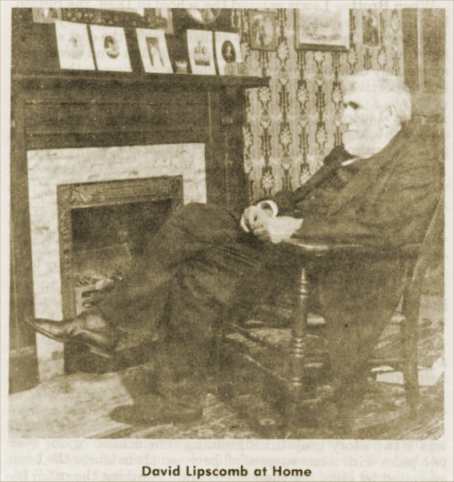
David Lipscomb
Gospel Advocate, Vol. 52, No. 3 (January 20, 1910): 77


The world can never be converted to Christ in the meetinghouses or by the regular or professional preachers. There are not enough preachers to reach the masses of the common people. Nor can they be carried to the meetinghouses to be converted. The Bible with its teachings must be carried to them at their homes and amid their family associations. It must be carried there by people who can make themselves familiar with them and in their surroundings. The preachers who depend on the congregations for a support cannot do this work. Men doing this work should be helped by the congregation in many ways. Personal help and assistance, where it can rendered, is better both for the helper and helped. It is better for a Christian to visit and to help a sick person than for him to send others to help him and stay away himself. All his service cannot be so rendered; but personal attention, a visit to a sick man, helps both parties, the visitor and the visited. A few persons in a community starting in an earnest way to worship God and to interest all they can is the surest way to build up a church I know. There are more Christians and churches in Nashville than in any city of its population in the world. They were made through the private members studying themselves and teaching the word of God in various neighborhoods. Very frequently these private members become earnest and effective preachers. South College Street, Green Street, Carroll Street, and Flat Rock were built up in this way; and in West Nashville, North Nashville, and East Nashville the same was true. Brethren that go to work when first converted, to learn and teach, grow by teaching and continue to spread and multiply.
--------------------------
Another paragraph worth hearing from Uncle Dave's pen. Terry Gardner called this to the attention of the Stone-Campbell email discussion list. I thought it worthy of passing along.